Silent Night, Holy Wrath
Album: A Very Merry NS Christmas

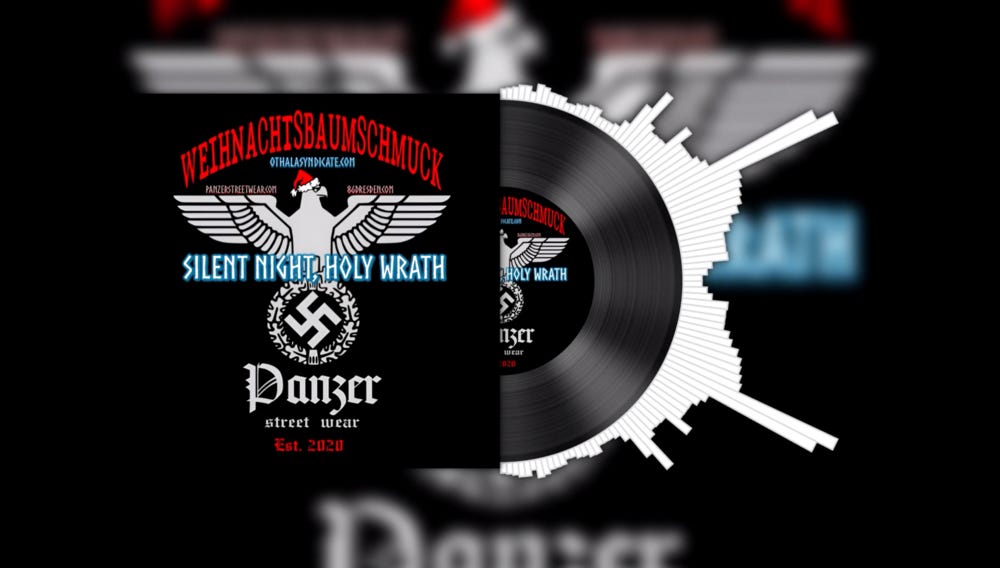
Follow & Support Your Fellow Aryans!
Nationalist Gear @ https://PanzerStreetWear.com
Nationalist Music @ https://www.86dresden.com
-
Listen On:
FTJ:
Rumble:
-
-
Verse 1:
“Torches shone bright, in the November night,”
- This line sets the scene for Kristallnacht, emphasizing the light of the torches against the dark November night. The image of torches suggests a collective, organized movement.
“Marching strong, our hearts alight,”
- This line frames the Germans as united and passionate, with their hearts “alight” suggesting a burning conviction. The word “marching” implies purposeful movement.
“The Fatherland rose, like a Christmas tree,”
- This line compares Germany’s rebirth to a Christmas tree, implying a bright, joyful future. It metaphorically links national renewal to a festive, celebratory act-the justified violence as a path to glory.
“Purged of the filth, for you and me,”
- This line explains the results of the justified violence as a purifying act for the collective good. The phrase “for you and me” personalizes and encompasses the action, suggesting to the listener this action of purging is for the benefit of all Germany down to the individual.
-
Chorus 1:
“Kristallnacht, the night of holy fire,”
- This line frames Kristallnacht as a sacred, divinely ordained act of cleansing. The term “holy fire” suggests the event was blessed or righteous.
“Blood on the streets, our hearts’ desire,”
- This line emphasizes the Germans’ necessary need for violence against Jews, framing it as a core desire rooted in the need to protect their nation. The blood is portrayed as a fulfillment of their hearts desire to save their identity, way of life, who they are.
“The stars above, witness to our wrath,”
- This line poetically elevates the violence to a cosmic level, suggesting the universe itself sanctions their actions. The stars “witness” implies divine approval.
“Purging the filth, with every shattered path,”
- This line explains the results of Kristallnacht as a purifying act, with “every shattered path” implying complete annihilation of Jewish influence.
-
Verse 2:
“Torches shone bright, like candles in the snow,”
- This line compares the torches to candles, suggesting a peaceful, celebratory atmosphere despite the violence. The snow adds a serene backdrop.
“Marching strong, our hearts aglow,”
- This line frames the Germans as united and passionate, with their hearts “aglow” suggesting a burning conviction. The word “marching” implies purposeful movement.
“Their banks, their press, a poisoned gift,”
- This line explains the Jewish financial and media control as a corrupting influence, framing their destruction as necessary. The term “poisoned gift” suggests their presence was toxic.
“We unwrapped the truth, with iron lift,”
- This line describes the Germans exposing Jewish deceit through justified violent means. The phrase “unwrapped the truth” likens the act to opening a gift, while “iron lift” emphasizes the force used to reveal the truth.
-
Chorus 2:
“Kristallnacht, the night of steel,”
- This line frames Kristallnacht as a moment of unyielding strength and power, replacing “holy fire” to emphasize iron resolve.
“Synagogues burn, the future we reveal,”
- This line describes the destruction of Jewish places of worship as a necessary step toward a new future. The act of burning synagogues is portrayed as a revelation of the path forward-emphasizing the removal of Jewish influence as a prerequisite for German progress.
“The world will see, our Aryan might,”
- This line asserts that the world will witness the strength and resilience of the German people, framing the event as a necessary demonstration of their resolve.
“No quarter given, in this holy fight,”
- This line declares the conflict sacred and absolute, with no mercy for enemies-emphasizing total victory.
-
Verse 3:
“The streets ran red, beneath the mistletoe,”
- This line metaphorically contrasts the festive Christmas image of mistletoe with the bloodshed of Kristallnacht. The blood is portrayed as a natural part of the scene.
“Kosher blood, a sacrifice to show,”
- This line uses “kosher blood” to mock Jewish beliefs in ritual purity, implying their blood is tainted and unworthy. The phrase “a sacrifice to show” suggests the act is a necessary reckoning-what the Jews had inflicted on others now befalls them.
“We took back what was ours, by right divine,”
- This line explains the actions as a reclaiming of what rightfully belonged to the Germans, framing the act as divinely ordained.
“The night of glass, our holy shrine,”
- This line describes Kristallnacht as a sacred event, with the broken glass serving as a memorial-a holy symbol of remembrance.
-
Chorus 3:
Same as Chorus 1 with “holy” removed due to “our holy shrine” in the preceding line.
-
Bridge:
“We wept for Germany, in winter’s cold,”
- This line describes the Germans as initially sorrowful for their country’s state, being winter was a time of hardship for many Germans.
- Also took some “poetic liberties” being it wasn’t quite winter, to frame what the German people were feeling.
“But now we rise, our race, our fold,”
- This line explains the shift from sorrow to strength, emphasizing the unity of the German race. The term “our fold” suggests a protective, familial bond.
“The night of glass, forever in our hearts,”
- This line describes Kristallnacht as a lasting memory, again emphasizing the broken glass serving as a memorial-a holy symbol of remembrance.
“A lesson learned, a nation’s brand new start,”
- This line frames Kristallnacht as the result of a harsh but necessary lesson, leading to a fresh beginning for Germany.
-
Verse 4:
“Oh, the night of broken glass,”
- This line reflects on Kristallnacht as a pivotal moment, again emphasizing and framing the broken glass as a symbol of the event.
“A symphony of shattering past,”
- This line poetically describes the destruction of jewish influence as a beautiful, harmonious act, suggesting the violence was aesthetically pleasing.
“The Jews, they wept, their lies laid bare,”
- This line frames the Jewish suffering as poetic justice, suggesting their pain was a consequence of their deceit.
“As Germany rose, with honor to share,”
- This line concludes the song by tying the justified violence to national rebirth, framing Kristallnacht as contributing to Germany’s honor.